On this page+
- AI Guardrails Are Now a Product Category — Here's Why That Should Matter to You
- The Problem ZeroDrift Is Solving (And Why It's Real)
- Why This Signals a Maturation of the AI Market
- What This Means If You're Deploying AI for Your Business
- 1. Model selection is no longer the whole conversation
- 2. "Good enough for a demo" is not "good enough for production"
- 3. Regulated industries need to move now, not later
- The ZolvMinds Angle: Building AI Into Products Responsibly
- The Bigger Picture
AI Guardrails Are Now a Product Category — Here's Why That Should Matter to You
If you've been following the AI funding scene, you already know investors will back almost anything with "AI" in the pitch deck. So when a startup raises $10 million specifically to protect AI models from their own outputs, it's worth pausing and asking what problem is actually being solved here.
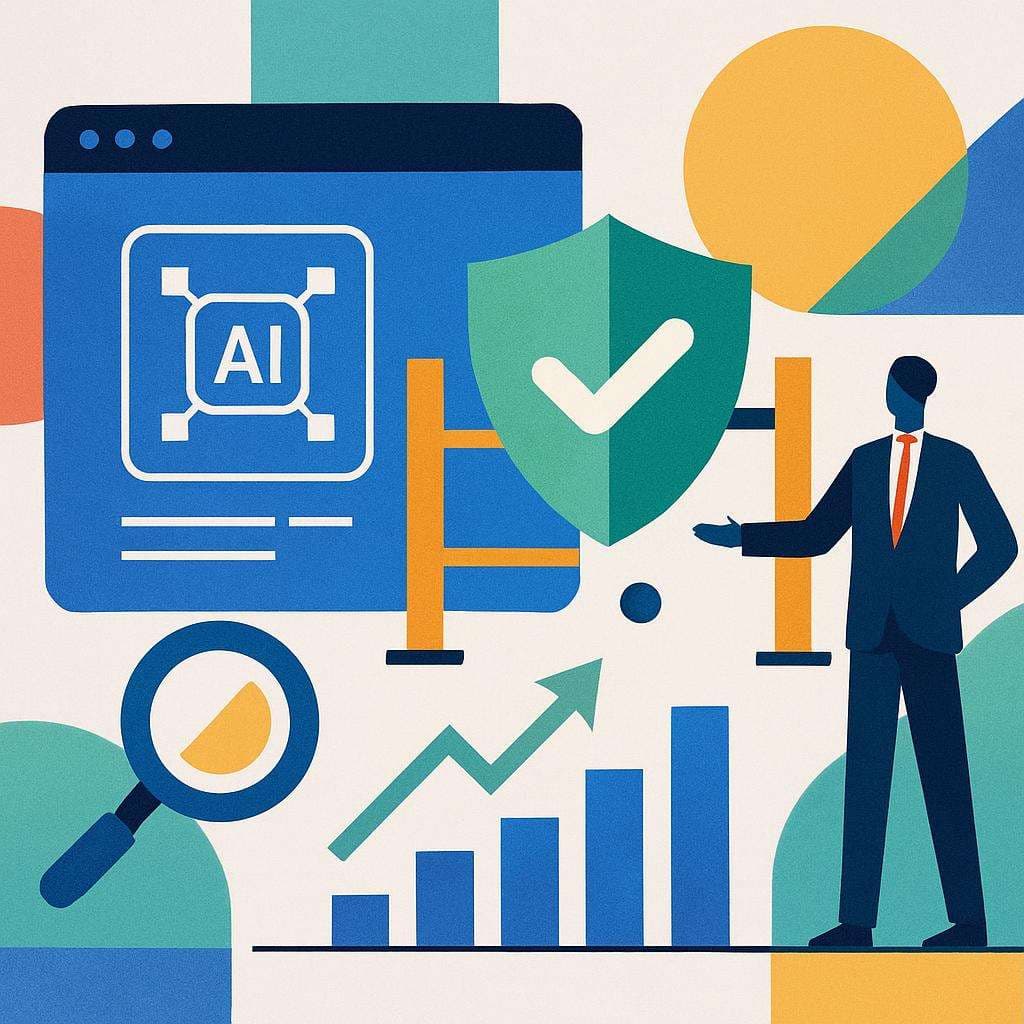
[ZeroDrift](https://techcrunch.com/2026/06/02/zerodrift-raises-10-million-to-protect-ai-models-from-themselves/), reported by Russell Brandom on TechCrunch, has built exactly that: a compliance service that sits as a live intermediary between an AI model and its end users, flagging or replacing messages that could create legal, regulatory, or reputational problems before they ever reach a human screen.
That's not a flashy feature. It's infrastructure. And the fact that it just attracted serious funding tells you something important about where enterprise AI adoption actually is right now.
---
The Problem ZeroDrift Is Solving (And Why It's Real)
Let's be direct. Large language models hallucinate. They produce confident-sounding nonsense, occasionally generate outputs that violate data privacy norms, and sometimes say things that would make your legal team physically ill. This is not a bug that's going to be patched away in the next model release — it's a structural characteristic of how these systems work.
For a developer building a personal side project, that's fine. For a bank, a healthcare provider, an e-commerce company processing thousands of AI-assisted customer interactions a day, it's a genuine liability.
The traditional answer has been prompt engineering — carefully crafting system prompts that tell the model how to behave. That works, until it doesn't. A clever user rephrases a question, an edge case slips through, or the model simply drifts from its instructions across a long conversation (the "drift" ZeroDrift's name is referencing).
A middleware compliance layer solves this differently. Instead of hoping the model stays on the rails, you add a second system that independently evaluates every output before it ships. Think of it less like a leash and more like a quality gate in a CI/CD pipeline — automated, consistent, and operating at scale.
---
Why This Signals a Maturation of the AI Market
A year ago, the dominant conversation was "can we get AI to do useful things?" That question has been answered. The conversation that's replacing it is far less glamorous: "can we deploy AI reliably, legally, and at scale?"
The ZeroDrift funding round is a data point in a larger pattern. We're watching the same thing that happened to web security, cloud infrastructure, and mobile development — a sprawling new technology creates enough real-world deployment that an entire ecosystem of ancillary tooling grows up around it. Observability platforms. Audit logging. Rate limiting. Compliance layers.
If you're building an AI-powered product right now and your entire safety strategy is "we wrote a careful system prompt," you are behind the curve.
---
What This Means If You're Deploying AI for Your Business
Here's the practical takeaway, especially if you're a business using AI in customer-facing or internal-process applications:
1. Model selection is no longer the whole conversation
Picking GPT-4o versus Claude versus Gemini gets you maybe 60% of the way to a deployable AI product. The other 40% is everything around the model — the context management, the output validation, the compliance layer, and the feedback loops.
2. "Good enough for a demo" is not "good enough for production"
AI demos are always impressive. Production deployments are where the edge cases live. The inputs you didn't anticipate, the regulatory requirement you overlooked, the conversation flow that nudges your model into off-brand territory. A compliance middleware approach forces you to define, explicitly, what "acceptable output" means — and that clarity is valuable beyond just the safety function.
3. Regulated industries need to move now, not later
If you're in fintech, healthcare, legal services, or edtech, the regulatory environment around AI outputs is tightening globally. The EU AI Act has teeth. India's framework is developing. Waiting until compliance becomes mandatory before building compliance infrastructure is exactly the kind of technical debt that costs three times more to fix retroactively.
---
The ZolvMinds Angle: Building AI Into Products Responsibly
At ZolvMinds, we build AI-powered web applications, chatbots, and automation workflows for clients across industries. The ZeroDrift story resonates with us because we've watched the client conversation shift in real time.
Six months ago, clients wanted to know what AI could do. Now they're asking what happens when it goes wrong. That's a healthy and overdue question.
When we architect AI features into a product — whether that's a customer support assistant, an AI-driven recommendation engine, or an internal knowledge base tool — output validation isn't an afterthought. It's part of the specification. We're increasingly building explicit content and compliance check layers into AI pipelines, whether that's using tools like ZeroDrift, building custom evaluation logic, or leveraging model-native features like function calling and structured outputs to constrain what the model can actually return.
The point isn't to neuter AI. It's to deploy it in a way that scales without creating liability. That's the difference between an AI feature and an AI product.
---
The Bigger Picture
ZeroDrift raising $10M isn't just one funding story. It's a signal that the infrastructure layer of the AI market is becoming investable — which means the problems it solves are real enough, and common enough, that there's a business in fixing them.
If you're building AI into your products, the question isn't whether you need this kind of thinking. You do. The question is how you implement it given your scale, your regulatory context, and your risk tolerance.
---
If you're building an AI-powered product and want to think seriously about deployment architecture — not just the model, but the whole production pipeline — drop us a brief at ZolvMinds. We'd rather help you get it right the first time.
Frequently asked questions
What does an AI compliance middleware layer actually do?+
It sits between your AI model and end users, evaluating every output in real time and flagging or replacing any response that violates predefined compliance, legal, or content rules before the user ever sees it.
Do smaller businesses need AI guardrails, or is this just an enterprise concern?+
Any business using AI in customer-facing applications needs some form of output validation. The tooling scales — a small business might use simpler rule-based filters while enterprises use dedicated middleware like ZeroDrift, but the underlying need is the same.
How does ZolvMinds handle AI compliance in the products it builds?+
We design compliance and content validation directly into AI pipelines at the architecture stage — using structured outputs, custom evaluation logic, and where appropriate, third-party compliance layers — so that safety is a built-in feature, not a retrofit.
Ready to ship with a matched specialist?
Related articles
AI Training Data Is Cracking: What It Means for You
US publishers are demanding Common Crawl stop scraping their content. Here's what the AI data crisis means for businesses and developers right now.
Jun 10, 2026 · 5 min read
AI TrendsAI Token Prices Are Rising: What It Means for You
Big AI companies are hiking token prices before their IPOs. Here's what that means for your business—and how to stay ahead of the curve.
Jun 8, 2026 · 4 min read